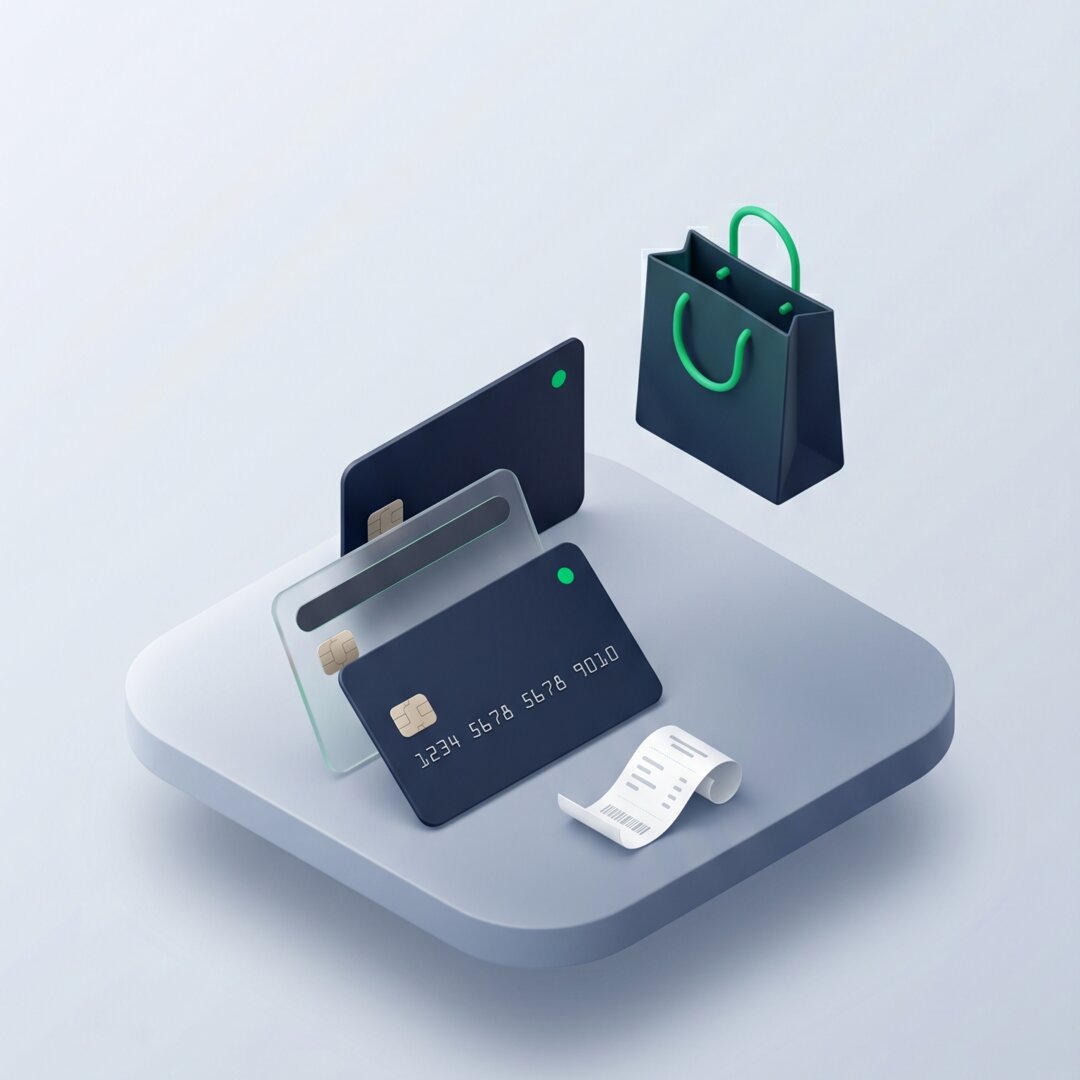
The store card in your wallet is running a much faster inactivity clock than the Visa from your bank. A Chase or Capital One card might tolerate a year-plus of zero activity. A typical Synchrony or Bread Financial store card often closes at six to nine months — and most cardholders never find out until checkout fails or their utilization quietly jumps.
Store cards close at 6–9 months of inactivity — roughly half the window of a typical bank Visa. Co-branded cards (Amazon Prime Visa, Macy's Amex) can be defended by automation. Closed-loop store cards (Kohl's Charge, Amazon Store Card) require a manual purchase at the retailer every quarter.
Automate your co-branded cards → or jump to pricingWho actually issues your store card
The retailer logo is marketing. The bank behind the account is almost always one of three issuers:
- Synchrony Financial — the largest US private-label issuer. Amazon Store Card, Lowe's, JCPenney, Sam's Club, TJX, Old Navy, Gap, Athleta, and roughly 100 more.
- Bread Financial (formerly Comenity Bank). Victoria's Secret, Wayfair, Ulta, IKEA, AAA, J.Crew, Anthropologie.
- Capital One Retail Services — Kohl's Charge and a handful of others. Separate from Capital One's general-purpose card policy.
A few retailers route differently (Target's REDcard through Target Bank, Macy's Amex through Citi Retail Services), but the bulk run through those three. The general per-issuer breakdown covers the major banks; this is the retail layer on top.
The 6–9 month window
Synchrony, Bread, and Capital One Retail typically close inactive store accounts in the 6–9 month range. Three structural reasons it's so much shorter than a bank-issued Visa:
Thinner per-account economics. Store cards earn from revolving interest and partner-funded rewards, not the open-network interchange a bank captures on every swipe. An inactive Synchrony account generates near-zero revenue while still consuming regulatory capital.
Subprime risk profile. Store-card portfolios skew below the prime line, with higher default rates. Trimming inactive accounts is part of how issuers manage cumulative loss.
Retailer pressure. Store cards exist to drive purchases at the partner store. An account that hasn't generated a sale in six months is failing its purpose — and the retailer has contractual influence on the issuer's account management.
The "soft closure" pattern
Synchrony in particular uses a distinctive two-step pattern. Rather than closing outright, the issuer reduces the credit limit to $0 first. The account is technically "open" but functionally dead — your available credit is zero, so the card can't be used. Formal closure usually follows within 30 days.
The $0-limit step sits in a regulatory grey area where the issuer can retract exposure without triggering the heavier procedural machinery of a closure. If you log in and see the limit displayed as $0, $1, or "Suspended" where it used to show a real number, take it as the closure flag it is. A silent credit-line cut hits your score on its own, and a $0 cut is the loudest possible warning. Make a posted charge that day or accept the card is on its way out.
Closed-loop vs co-branded
Store cards split into two categories that determine your defense options:
Closed-loop cards work only at the partner merchant. They run on the retailer's private rails, not Visa/Mastercard/Amex/Discover. Amazon Store Card, Kohl's Charge, Macy's Store Card, Victoria's Secret, JCPenney, Lowe's Advantage. There's no way to make a posted charge anywhere except the retailer's checkout.
Co-branded cards carry a network logo alongside the retailer logo. Amazon Prime Visa (Chase), Macy's Amex (Citi), Costco Anywhere Visa (Citi), Capital One Walmart Rewards. Functionally bank cards with a retailer skin.
Automation routes through the open payment network — which works for any co-branded card, but cannot reach a closed-loop card. The mini-charge strategy covers everything except this category. Closed-loop cards have to be handled at the merchant.
Why store-card closures hurt more than expected
Limits stack. A $1,500 closed limit still removes $1,500 from your aggregate available credit. Most people who have one forgotten store card have several, and the cuts compound.
Account-age erosion is harsh. The JCPenney or Lane Bryant card from college is often one of your oldest tradelines. The hit when an old account rolls off is biggest when the lost account is among the oldest.
A single store-card closure can knock 10–25 FICO points off in the immediate aftermath, with deferred age-related damage arriving roughly ten years later when the account drops off entirely.
Keeping a closed-loop store card alive
If automation can't reach the card, three manual approaches work:
Anchor a recurring purchase at the retailer. Amazon Subscribe & Save, regular contacts from a vision-care site, anything monthly. A $4–$5 monthly post clears every store-card threshold.
Quarterly calendar reminder. A $5 gift card, the smallest item in the cart, an in-store coupon with a tiny minimum. Pay it off the same week.
Move a real recurring expense into the retailer's ecosystem. Some retailers extend their card to peripheral services (Sam's Club gas, home-improvement chains on contractor billing). Worth the friction only for cards with deep history.
For co-branded cards, the standard automation handles them like any other Visa or Amex — even when the issuer applies a store-card-aggressive inactivity threshold behind the scenes.
If a store card has already been closed
Three things change vs. a bank-card closure. Reactivation success rates are lower — Synchrony and Bread approve reactivation less often than Capital One or Discover. Reapplication pulls a fresh hard inquiry. And score recovery is slow: the utilization spike clears within 30 days, but the account-age impact runs until the closed account ages off the report ten years from closure.
The honest answer for most people: if the card has been closed more than a few weeks, accept it and protect the rest of the portfolio. Don't let the next one go the same way.